mold die casting
Mold die casting is a highly efficient manufacturing process used to produce precisely shaped metal parts. At its core, it involves injecting molten metal, typically non-ferrous alloys like aluminum, zinc, or magnesium, under high pressure into a steel mold cavity. This mold, often referred to as a die, is custom-made to the exact specifications of the desired part. The rapid solidification of the molten metal within the cooled mold results in a near-net-shape component, meaning it requires minimal, if any, further machining. This method is favored for its ability to create complex geometries with tight tolerances and excellent surface finishes, making it ideal for high-volume production runs across various industries, from automotive and aerospace to electronics and consumer goods.
The process of mold die casting begins with the creation of the die itself. These dies are meticulously machined from hardened tool steel and often consist of two halves: a cover die and an ejector die. The cover die is stationary and connected to the injection machine, while the ejector die is movable and contains the mechanism for pushing the finished part out. Both halves feature intricate cavities that, when closed, form the exact shape of the part to be cast. Cooling channels are integrated into the die design to control the temperature and facilitate rapid solidification of the molten metal, which is crucial for achieving consistent part quality and minimizing cycle times.
Once the mold is prepared and assembled in the die casting machine, the molten metal is ready for injection. There are two primary types of mold die casting machines: hot-chamber and cold-chamber. Hot-chamber machines are typically used for lower melting point alloys like zinc and magnesium. In this setup, the melting pot is integrated directly with the machine, and a gooseneck mechanism injects the molten metal into the die. Cold-chamber machines, on the other hand, are preferred for higher melting point alloys such as aluminum. Here, the molten metal is transferred from a separate furnace into a shot sleeve, from where a hydraulic ram then forces it into the die cavity.
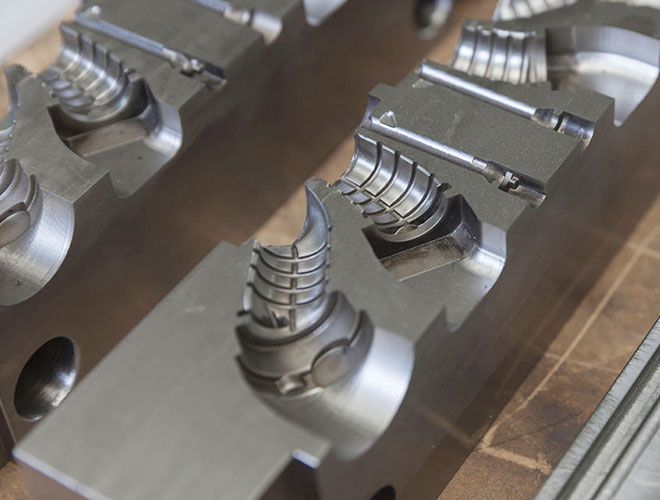
What is mold die casting and how does it work?
The injection phase is critical to the success of mold die casting. The molten metal is injected at pressures ranging from 1,500 to 25,000 psi, ensuring that it completely fills every intricate detail of the die cavity before it begins to solidify. Precise control over temperature, pressure, and injection speed is paramount to prevent defects such as porosity or incomplete fills. Many leading manufacturers and a specialized die casting mold factory dedicate significant resources to developing advanced die designs and process controls to optimize this phase, ensuring maximum efficiency and minimal waste in their operations.
Following injection, a brief cooling period allows the molten metal to solidify within the mold. The cooling time depends on the part’s wall thickness, the type of alloy, and the die’s temperature. Once solid, the die opens, and ejector pins, integrated into the ejector half of the mold, push the finished casting out of the cavity. The casting, along with any runner and gating system that directed the molten metal into the cavity, is then removed. These runners and gates are typically trimmed off in a subsequent operation and can often be recycled, contributing to the cost-effectiveness and sustainability of mold die casting.
In essence, mold die casting is a sophisticated and highly repeatable process that enables the mass production of high-precision metal components. Its ability to deliver complex shapes with excellent surface finishes and dimensional accuracy makes it an indispensable technique across numerous industries. The continuous advancements in die materials, casting machine technology, and process automation further solidify its position as a preferred method for creating durable and intricate metal parts efficiently and economically. Understanding what is mold die casting reveals a fascinating interplay of metallurgy, engineering, and automation that drives modern manufacturing.